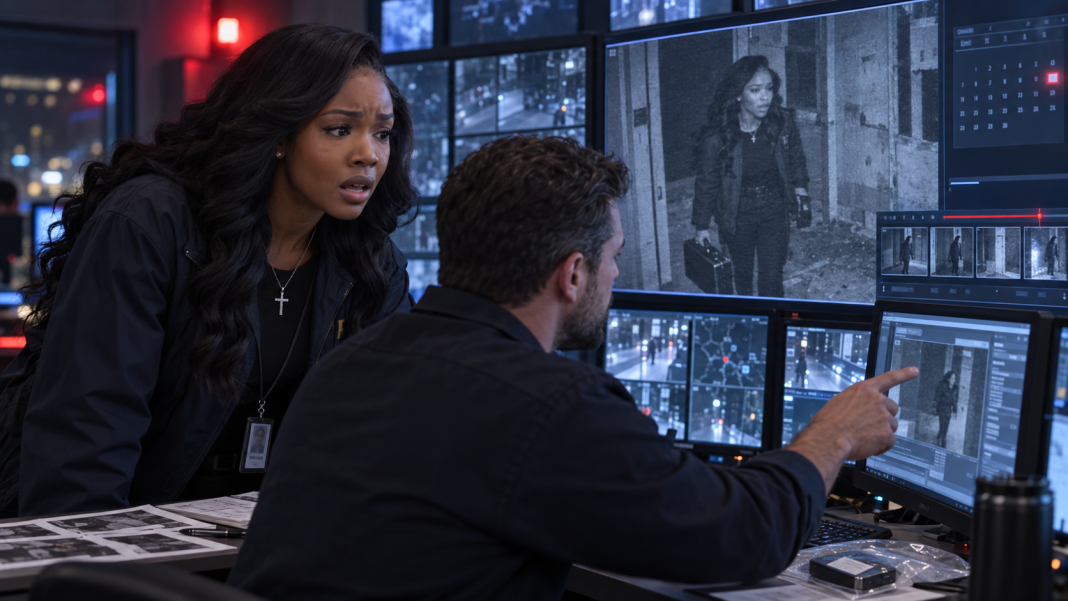
Shortly before midnight, Sienna received an urgent call from the city’s surveillance center.
A security camera had recorded her entering an abandoned municipal records building while carrying a black case.
Seconds later, the camera feed disappeared as an explosion tore through the building.
There was only one problem.
The recording was timestamped 3:17 a.m.—tomorrow.
Sienna initially suspected a technical error or a sophisticated deepfake. Digital-forensics specialists examined every frame, but her face, movements and proportions matched perfectly. The file had also been inserted directly into a protected city server using administrator access.
Someone wanted the recording to appear completely authentic.
Then Sienna received an anonymous message:
“You have twelve hours to prove you weren’t there.”
She studied the footage again. The building’s entrance, streetlights and surrounding vehicles all appeared exactly as they did now. Even the black case carried her fingerprints—prints that could have been taken from any object she touched.
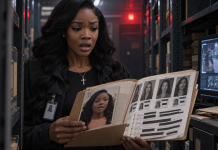
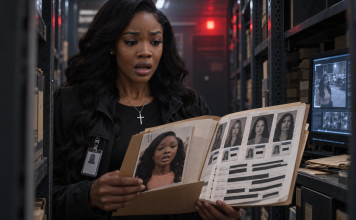
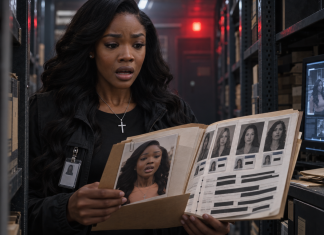
Sienna went to the building hours before the time shown in the video.
Inside, she found the same black case waiting beneath the security camera. It contained confidential records from an investigation she had recently reopened, along with material designed to make it appear that she had stolen them.
A device had also been placed inside the building to destroy the remaining archive at exactly 3:17 a.m.
The plan was clear.
After the building was destroyed, the prerecorded footage would show Sienna arriving with the case. She would be blamed for stealing the files and eliminating the evidence.
But behind a false wall, Sienna discovered something much bigger.
A hidden production room contained cameras, lighting equipment and powerful computers capable of manufacturing convincing security recordings. Hundreds of prepared videos showed judges, police officers and government officials committing crimes that had not yet happened.
The organization was not simply erasing evidence.
It was creating evidence in advance.
Sienna alerted a tactical team and secured the device before the scheduled time. Then she began copying the files from the hidden servers.
At 3:16 a.m., every monitor suddenly went black.
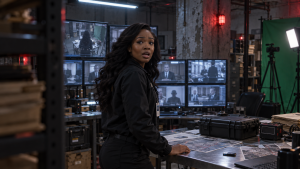
One screen turned back on.
It showed Sienna entering the building with the black case—exactly as she had seen in the original recording.
But the video continued beyond the earlier ending.
It showed her discovering the hidden room, copying the files and standing in front of the same screen.
The footage had predicted every move she made.
Then a phone began ringing inside the black case.
Sienna answered.
“The video was never meant to frame you,” a distorted voice said. “It was meant to make sure you came here.”
The doors locked automatically.
A new camera feed appeared, showing Sienna from directly behind her.
In the recording, a masked figure slowly stepped out of the darkness.
Sienna turned around.
The room was empty.
When she looked back at the monitor, the figure was standing close enough to touch her.