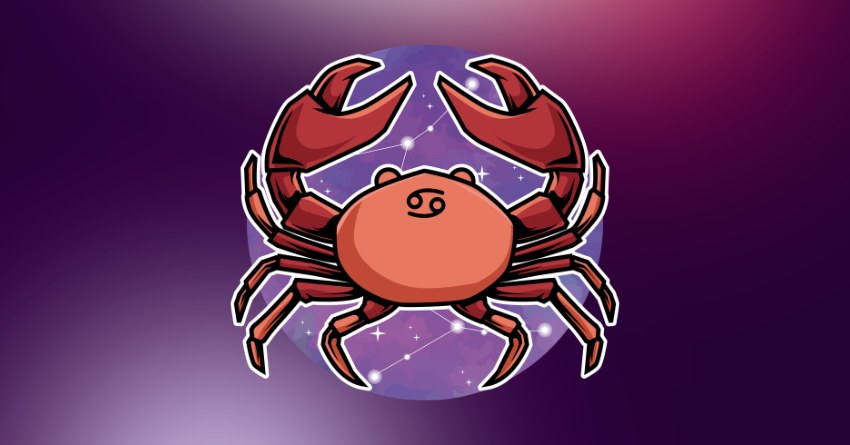
Think about how often you have carried a situation longer than it deserved because you wanted to preserve peace. Cancer can do that beautifully, but beauty has a cost when it becomes self-abandonment. The hidden trait under pressure is that you are not truly attached to chaos itself; you are attached to continuity, and you will tolerate too much to protect it. This period asks you to notice where continuity has become inertia. Once you see that difference, your response changes. You stop trying to keep everything the same and start deciding what deserves your care.

When the home front becomes the first battleground
For Cancer, the first place chaos often lands is the place that is supposed to feel safest. That does not always mean a literal home; it can mean your private routine, your closest relationships, or the emotional atmosphere you depend on to recover from the outside world. One practical sign of this phase is that small domestic details begin to carry more meaning than usual. A schedule changes. A conversation at home lands with extra weight. Someone close to you acts differently, and you feel that shift before anyone explains it.
This is where your hidden trait becomes useful in a very concrete way. You do not have to solve every tension in one sitting. Instead, you can identify which problem is structural and which problem is emotional. A structural problem might be a routine that no longer works, a shared responsibility that is uneven, or a boundary that has been too vague. An emotional problem might be an unspoken fear, an assumption, or a reaction that has been stored up too long. If you treat everything as one big storm, you lose clarity. If you separate the pieces, you gain leverage.
Ask yourself: what in your daily environment has become louder than it should be, and what have you been trying to smooth over instead of addressing directly? That question matters because Cancer can absorb emotional friction for a long time before admitting exhaustion. This period rewards honesty about what your space is costing you. Not every disruption is a threat. Sometimes it is the first honest signal that a quieter, healthier arrangement is possible.
In relationships, the truth arrives in the tone, not the words
The relational chaos that may enter your life is rarely about a single scandal or dramatic confession. More often, it shows up in tone, timing, and avoidance. Someone may be technically present but emotionally absent. A connection may begin to require more decoding than relating. Your hidden strength is that you can hear the difference between reassurance and real reassurance, between closeness and habit. Many people miss those distinctions until they are already hurt; you feel them early, which is both a burden and a protection.
This is where you may need to answer one difficult question: are you trying to keep a bond intact, or are you trying to keep the image of it intact? The answer can be uncomfortable, but it is also freeing. Cancer often gives more grace than others realize, and grace is beautiful until it becomes a substitute for reciprocity. The person or situation that is meant to remain in your life will not require you to mute your instincts in order to preserve peace.
In this phase, your best move is to let people reveal themselves in small moments. Do they follow through when it matters? Do they respond with care, or only with words? Do they handle tension, or disappear when things become real? The chaos around you may simply strip away the filters that once made uncertainty look manageable. If that happens, do not treat clarity as cruelty. Clarity is information. It tells you what kind of emotional investment is still worth making.
Work, commitments, and the moment something no longer fits