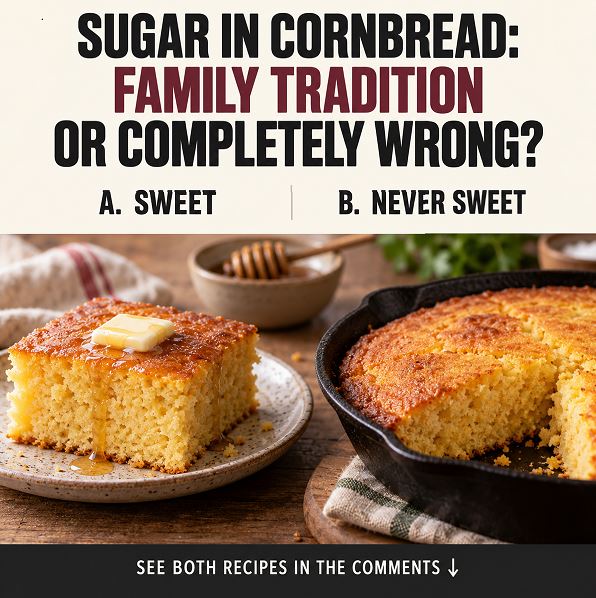
Few ingredients can start a kitchen argument as quickly as one spoonful of sugar added to cornbread.
For some families, lightly sweet cornbread is the only version that tastes right. It is soft, tender and just sweet enough to eat with butter, honey or a bowl of chili. For others—especially many cooks raised on older Southern styles—sugar turns cornbread into cake. Their ideal slice has a deeply browned crust, a pronounced corn flavor and enough savory character to sit beside beans or greens.
So which side is correct?
The honest answer is that both versions belong to real American food traditions. The disagreement is not simply about taste; it reflects region, family habit, ingredients and changes in the way cornmeal has been produced.
Why traditional Southern cornbread was often unsweetened
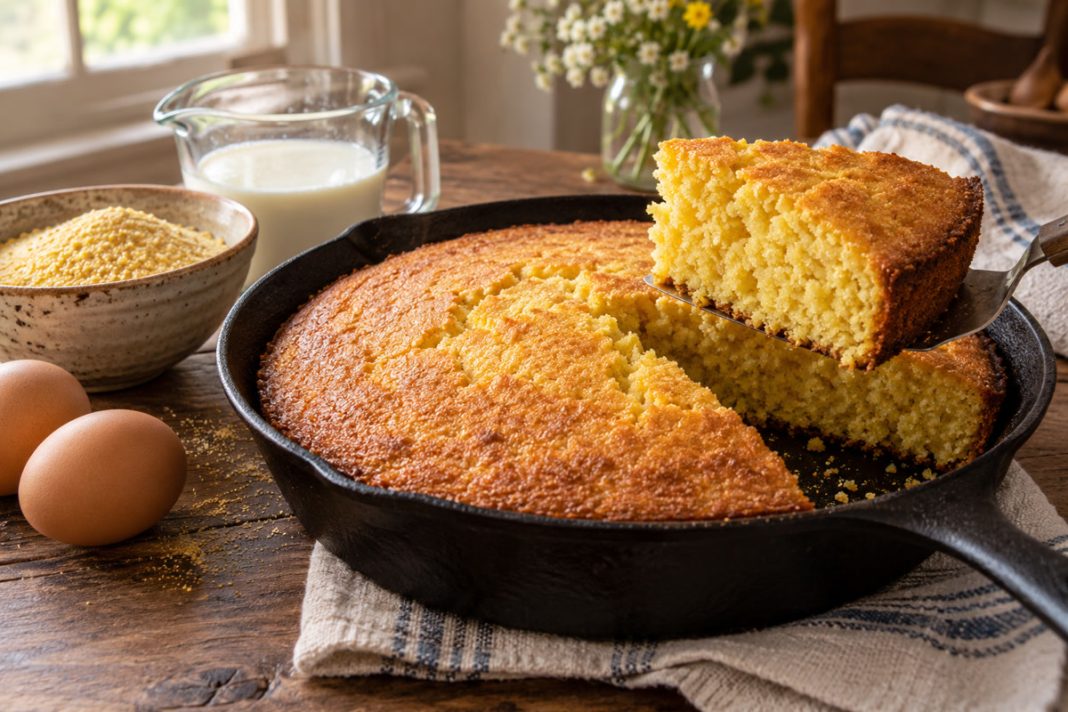
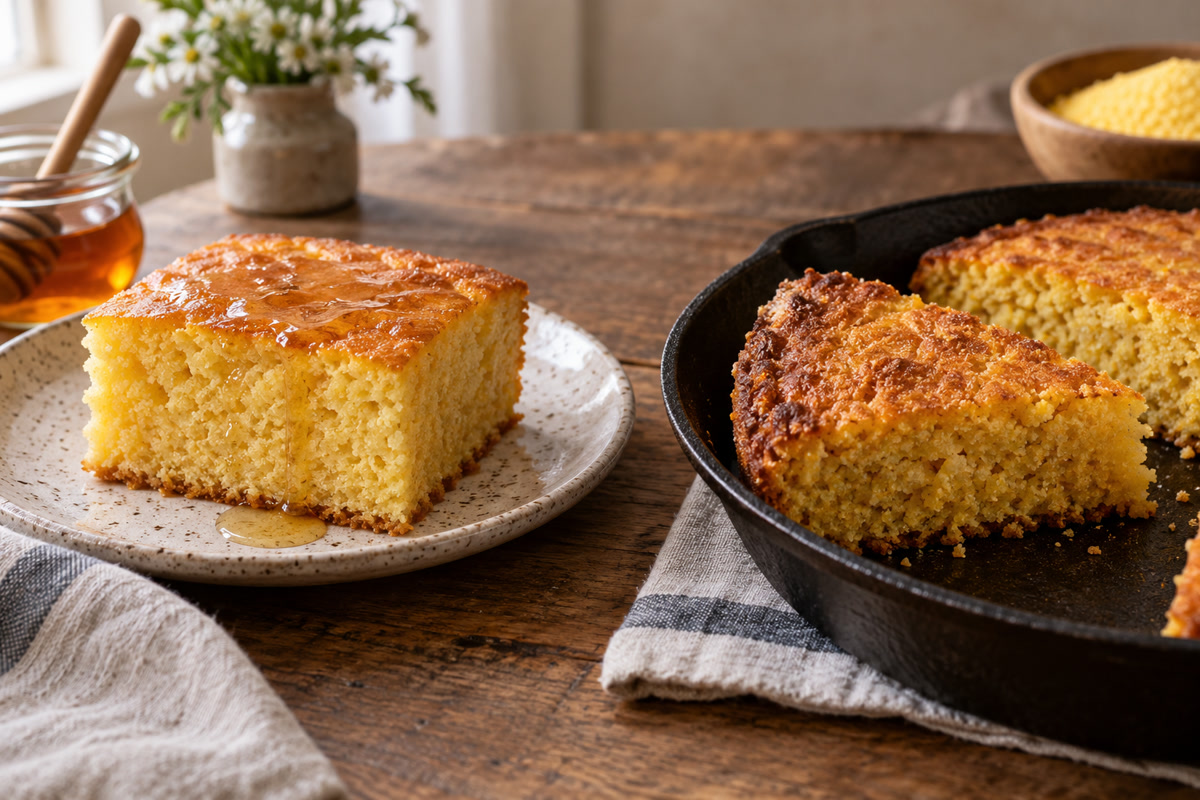
Historically, many Southern cooks used stone-ground cornmeal with a fuller corn flavor and natural sweetness. Baked in a hot, greased cast-iron skillet, the batter formed a crisp crust while staying tender inside. Sugar was not necessary for the bread to taste rich or balanced, and in many households it was not part of the recipe at all.
As industrial milling became more common, cornmeal could be ground from different corn and processed more finely. Some food historians and cooks argue that the resulting meal had less flavor, encouraging bakers to add wheat flour and sugar to improve tenderness and taste. At the same time, Northern and packaged cornbread styles helped normalize a sweeter, more cake-like crumb.
Family recipes followed different paths, and eventually preference began to feel like principle.
The savory skillet version
For a crisp-edged, unsweetened cornbread, heat a 10-inch cast-iron skillet with two tablespoons of bacon drippings or oil while the oven reaches 425°F.
Whisk together:
- 2 cups stone-ground cornmeal
- 1 teaspoon baking powder
- 1/2 teaspoon baking soda
- 1 teaspoon salt
- 1 3/4 cups buttermilk
- 1 large egg
Pour the batter into the sizzling skillet and bake for 20 to 25 minutes. The hot fat is essential: it creates the dark golden crust that gives savory cornbread much of its character.
The lightly sweet version
For a softer cornbread with gentle sweetness, whisk together:
- 1 cup cornmeal
- 1 cup all-purpose flour
- 1/4 cup sugar
- 1 tablespoon baking powder
- 1/2 teaspoon salt
- 1 cup milk
- 2 large eggs
- 1/3 cup melted butter
Bake in a greased 8-inch square pan at 400°F for about 20 minutes. This version is tender, easy to slice and especially good with chili, barbecue or a swipe of salted butter.
What actually makes cornbread good
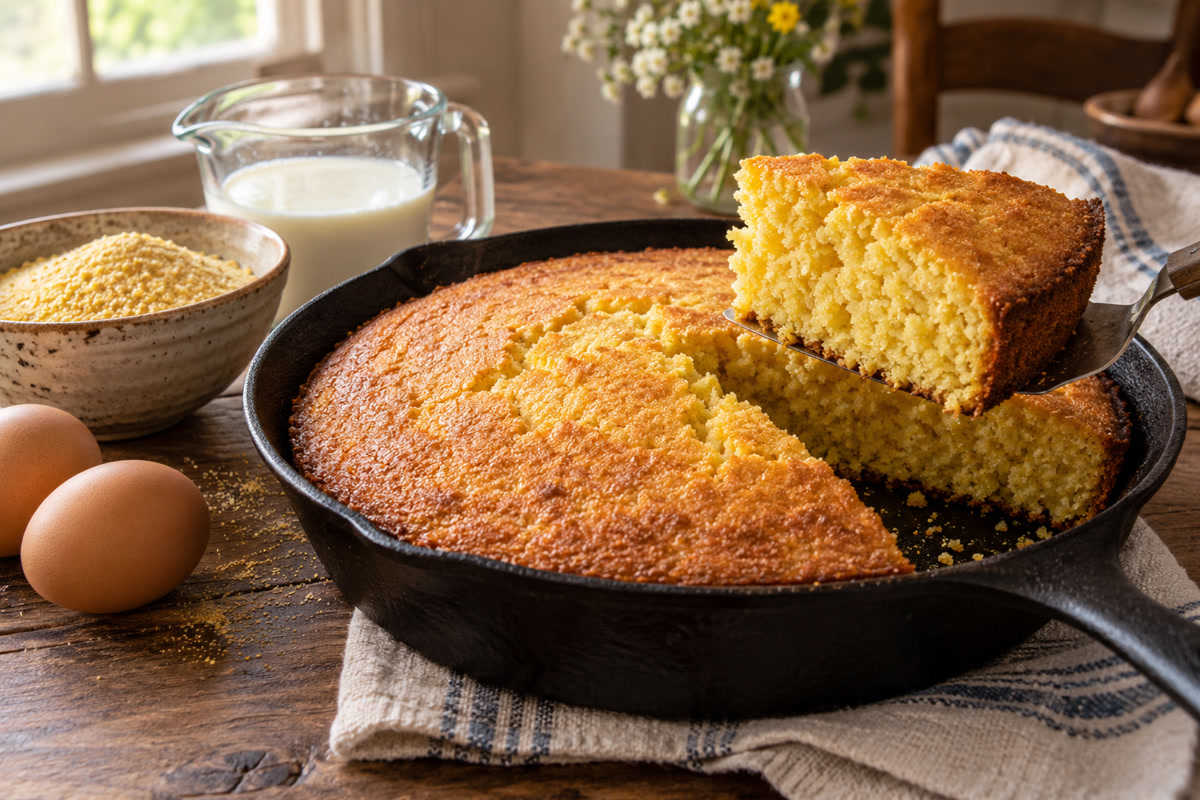
Whether you add sugar or not, three details matter. Use fresh cornmeal; its oils can turn stale, and old meal tastes flat. Preheat the pan if you want a crisp crust. Finally, mix only until the dry ingredients are moistened. Overmixing makes either style tougher.
The sugar debate survives because cornbread is more than a side dish. It is one of those foods people use to locate home. A bite can bring back a grandmother’s skillet, a church supper, beans simmering on the stove or chili on a cold night. When someone says a version is “wrong,” they often mean it is not the one that shaped their memory.
Make the version your family loves. Better yet, make both and put them on the same table. Food traditions stay alive not because they never change, but because people care enough to keep discussing, cooking and passing them on.
Now the only question left is the one no cornbread table can avoid: sweet or never sweet?