
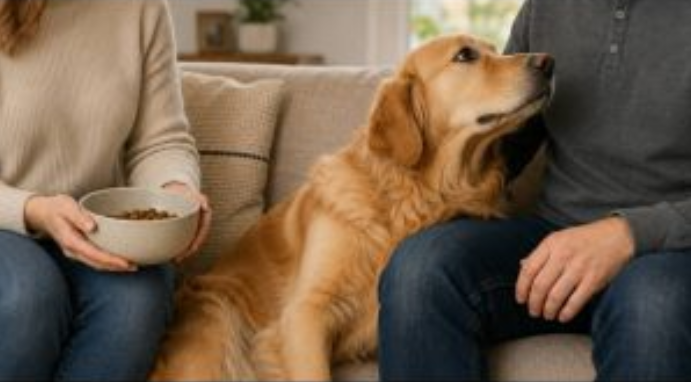
Dogs are deeply social animals, and anyone who has lived with one has probably noticed that they do not always treat every member of a household in exactly the same way. A dog may enjoy spending time with several people while still showing a particularly strong attachment to one individual. That person may be the one the dog follows through the house, waits for at the door, or seeks out whenever it wants comfort. A dog’s favorite person is usually not chosen randomly. The relationship develops through a combination of attention, trust, positive experiences, personality, genetics, and early socialization.
Although dogs have lived alongside humans for thousands of years, many of their natural social instincts remain powerful. Their ancestors depended on cooperation and group relationships for survival, and modern dogs continue to value social connection. Naturally, they pay close attention to the people who provide important resources such as food, water, safety, affection, and companionship. However, simply being the person who fills the food bowl does not automatically guarantee the strongest bond.
One of the most important elements is consistent attention. Dogs quickly learn who regularly interacts with them, speaks to them, plays with them, takes them outside, and responds to their needs. The more meaningful interactions a person shares with a dog, the greater the opportunity for emotional attachment to develop.
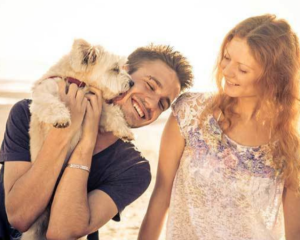
Dogs are also excellent learners. They notice which behaviors lead to desirable outcomes and adjust accordingly. When a dog sits on command and receives praise, for example, it begins associating that person with a positive experience. The same principle can apply in everyday situations. A dog may bring a toy to someone because it has learned that this particular person is most likely to play.
For this reason, positive reinforcement can have a major influence on human-dog relationships. Walks, games, gentle physical contact, treats, encouragement, and a comfortable environment all help create positive associations. Over time, these repeated experiences can build trust and make one person especially important in the animal’s life.
There may even be a biological component to this connection. Research examining interactions between humans and dogs has associated affectionate social contact with oxytocin, a hormone connected with bonding. Studies have also suggested that dogs can display physiological responses when reunited with people to whom they are strongly attached. These findings support what many owners observe every day: the relationship between dogs and humans can become emotionally significant for both sides.
Genetics can influence the way that bond is expressed. Certain breeds have historically been developed to work closely with humans, guard property, protect families, or perform specific tasks. As a result, some dogs may naturally form intense attachments to one or several people. Breeds known for loyalty can sometimes appear almost inseparable from their chosen human. Other dogs may be naturally more independent and less demonstrative. Being reserved does not necessarily mean that a dog feels less attachment. It may simply express affection differently.
Personality compatibility can matter as well. A calm dog may naturally prefer someone whose behavior is quiet and predictable, while an energetic animal may be especially attracted to the family member who frequently plays, runs, or explores outdoors with it. Humans may unintentionally encourage these matches by choosing pets whose temperaments resemble their own lifestyle.

Dogs are also remarkably sensitive to body language, facial expressions, tone of voice, and emotional cues. They continuously observe the people around them. Someone who behaves calmly and consistently may therefore become a source of security. Familiar expressions, movements, and routines can make interactions easier for the animal to understand.
Early experiences play another major role. Puppies go through an especially important social development period during their first months of life. Positive exposure to humans during this stage teaches them that people can represent safety, care, play, and comfort. Puppies that experience gentle handling and appropriate socialization often have a stronger foundation for forming healthy relationships later.
By contrast, stressful experiences during early development can make trust more difficult. Puppies separated from their mothers and littermates too early may have a greater risk of developing fear-related behaviors. Sudden changes in environment, poor socialization, or frightening experiences can also affect how readily a dog becomes comfortable with new caregivers.
Once a strong attachment forms, the signs are often easy to recognize. A dog may follow its favorite person from room to room, rest beside them, bring them toys, respond immediately to their voice, or wait near the door when they leave. Reunions can involve enthusiastic tail wagging, excited movement, affectionate staring, or other obvious displays of happiness.
A favorite human can also become an important source of reassurance during stressful situations. Some dogs seek that person when frightened or uncertain, while others may become protective of them. Certain animals may even demand attention when another pet approaches their preferred human.

Ultimately, dogs tend to develop their strongest relationships with people who make them feel safe, understood, rewarded, and emotionally connected. Feeding certainly matters, but affection is built through much more than meals. Consistency, patience, shared experiences, communication, and trust are often what transform an ordinary caregiver into the person a dog chooses to stay closest to