NATURAL DOESN’T ALWAYS MEAN SAFE. CHECK THESE 6 HERBS BEFORE MIXING THEM WITH MEDICATION.
“Natural” and “safe” are not the same word. Herbs contain active compounds, and some of those compounds can change the way a medication is absorbed, processed or removed from the body. A supplement may make a drug’s effect stronger, weaken it, or add a second effect—such as increased bleeding or lower blood sugar—that was never intended.
That does not mean herbs are automatically dangerous. It means they deserve the same respect we give everything else that can affect the body. The National Center for Complementary and Integrative Health advises people to tell their health care providers about all supplements and medications they use. These six herbs are especially worth putting on that list.
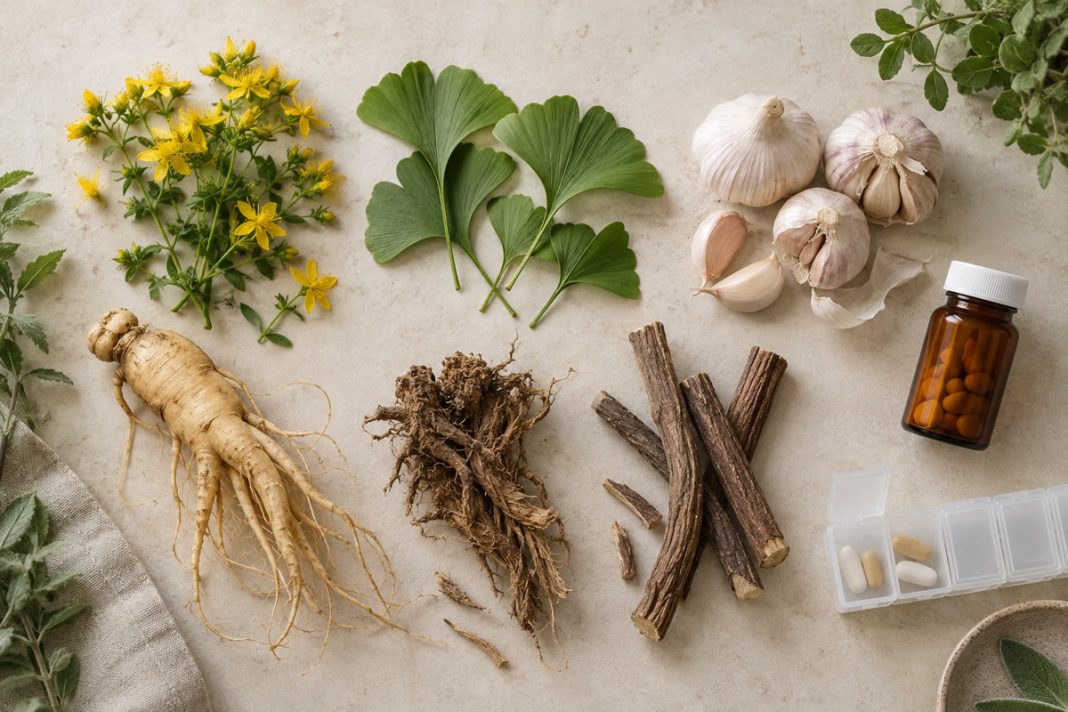
1. St. John’s wort
St. John’s wort has one of the best-documented records of herb–drug interactions. It can speed up processes the body uses to handle many medications, causing drug levels to fall. NCCIH lists interactions with birth-control pills, warfarin, certain statins, digoxin, transplant medicine, seizure medicine, and some HIV and cancer drugs. Combining it with medications that affect serotonin may also increase serious serotonin-related side effects.
This is not a supplement to start—or stop—without professional guidance, especially when the prescription involved is essential.
2. Ginkgo
Ginkgo leaf extract is often marketed for memory and “brain health,” although NCCIH says the evidence for many promoted uses is uncertain or inconclusive. Ginkgo may increase bleeding risk in people taking anticoagulants such as warfarin and may interact with other medications.
Anyone using a blood thinner, preparing for surgery, or taking several prescriptions should put ginkgo on the list they review with a clinician or pharmacist.
3. Garlic supplements
Garlic used in ordinary cooking is not the same as a concentrated capsule or extract. Garlic supplements may increase bleeding risk, particularly when combined with anticoagulants or aspirin. That concern also matters before surgery or certain dental procedures.
Do not assume a supplement is harmless because garlic is a familiar food. Concentration, dose and frequency can make the exposure very different from adding a clove to dinner.
4. Goldenseal
Goldenseal is promoted for colds and digestive complaints, but rigorous evidence for those uses is lacking. Its interaction potential is more important. NCCIH reports that goldenseal may change how the body processes many medicines. In one study, healthy adults who received goldenseal extract with metformin had metformin levels decrease by about 25 percent—enough to potentially interfere with glucose control in someone taking the drug for type 2 diabetes.
People using metformin or other prescription medicine should not treat goldenseal as a routine add-on.
5. Asian ginseng
Asian ginseng is commonly promoted for energy, fatigue and stress. Research is mixed, and it may interfere with blood clotting. Some evidence also suggests that it can lower blood sugar. That combination deserves attention for people using diabetes medication, anticoagulants or several prescriptions.
Insomnia is its most common reported side effect, another reason to mention it when reviewing sleep problems or medication changes with a provider.
6. Licorice root
Licorice root is not the same as licorice-flavored candy. Products containing glycyrrhizin can cause serious effects, including irregular heartbeat, particularly in large amounts or with long-term use. Risk may be higher in people with high blood pressure, heart or kidney conditions, or high salt intake. Interactions with corticosteroids have also been reported.
“DGL” licorice has had most glycyrrhizin removed, but that does not make every product appropriate for every person.
The safest next step takes two minutes
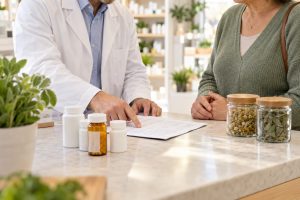
Make one list containing prescription medicines, over-the-counter drugs, vitamins, teas, tinctures and herbal capsules. Bring it to a pharmacist or clinician and ask one direct question: “Do any of these interact?” Include the exact product label, because two supplements with the same herb name may contain different extracts and amounts.
Do not stop a prescribed medication because of something you read online, and do not assume that separating an herb and a drug by a few hours always prevents an interaction. Some effects last much longer.
Herbs can be part of a thoughtful wellness routine. The goal is not fear—it is making sure every person involved in your care knows the complete picture.
This article is for general education and is not a substitute for individualized medical advice.